


KOMAX GROUP:
CULTURE IS A SHARED RESPONSIBILITY
A BOARD CHAIR’S PERSPECTIVE
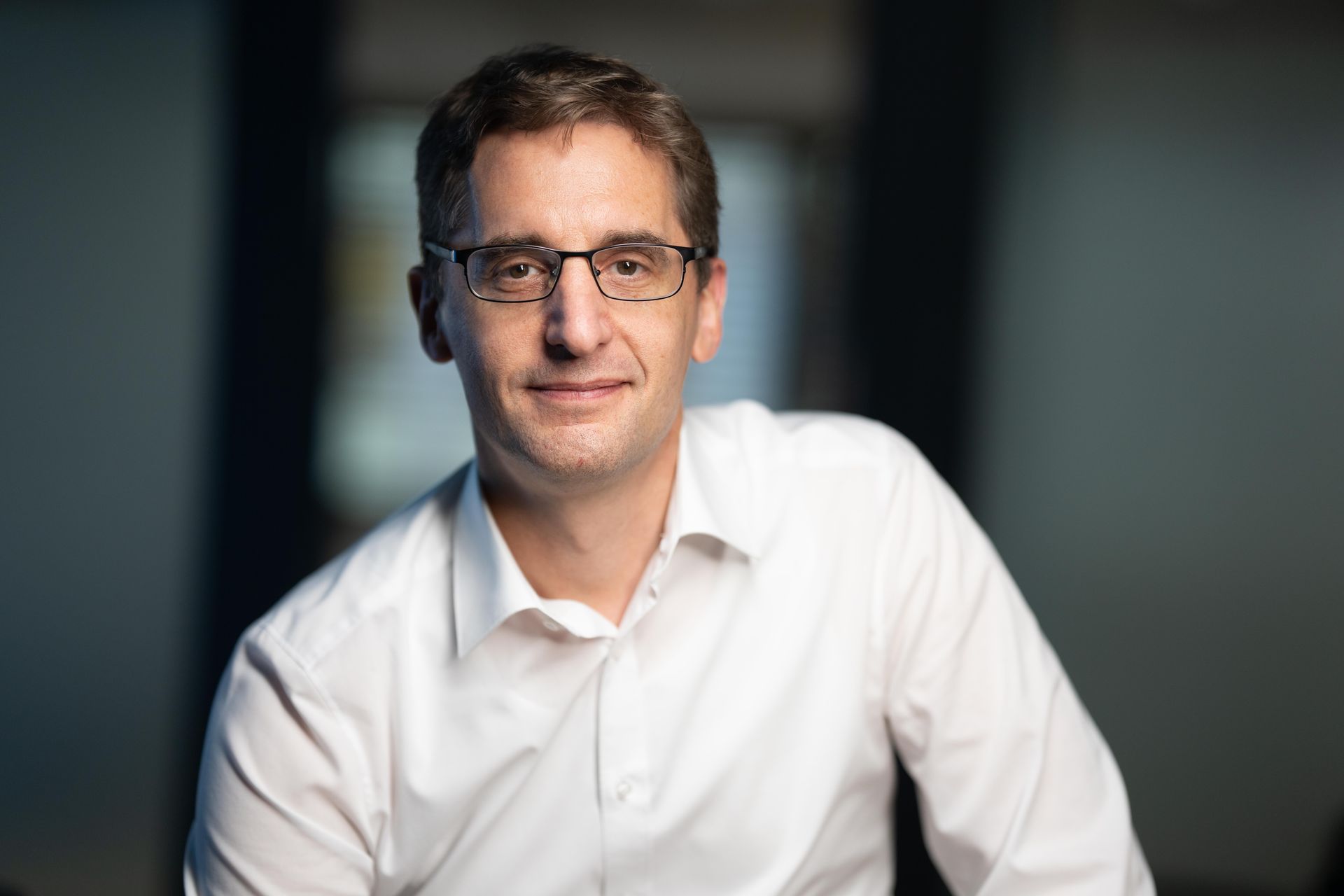
Dr. Andreas Häberli is Chairman of the Board, an entrepreneur and a long-standing leader in international high-tech companies. A PhD electrical engineer from ETH Zurich, he spent many years as an innovator and member of the executive management team at the dormakaba Group. Today, he is the founder and co-CEO of PhenoSign and serves on the boards of various global industrial companies.
CULTURE AS A LEADERSHIP RESPONSIBILITY
Christoph Strömer speaks with Dr. Andreas Häberli about culture as a leadership and board issue: culture as an ongoing process, self-correction instead of harmony, power, integrity and skin in the game. The conversation also makes clear why responsibility in Switzerland often automatically
more personal than in large, anonymous systems—and why culture becomes a decisive factor during transitions, M&A situations and in global organizations. From there, the thought takes us surprisingly far: to the question of why some cultures have shaped the world for centuries—and what even a Roman grammatical tense, the future perfect, might reveal about this.
Christoph Strömer: My cheeky opening would be: Culture emerges and has an impact—and it doesn’t ask who chairs the supervisory board, board of directors or executive board. Could that be why culture keeps getting ignored? Or am I mistaken?
Dr. Andreas Häberli: I don’t think culture is deliberately ignored. It’s there; you can sense it. You join a board or a new company and immediately feel that something is going on. But what do you do with that? Where do you start? And culture becomes visible in people’s behavior, especially when things get difficult. What can happen is that, amid the pressure of operational issues, people turn instead to problems they can solve quickly, because culture can’t be changed or influenced overnight.
So, like a blind spot: managers want to control, change and steer things—and whatever resists that falls off the radar.
Yes. Managers are used to measuring and controlling. There’s that famous line attributed to Peter Drucker: “If you can’t measure it, you can’t manage it.” I think that’s dangerous when taken out of context. I’d rather follow Einstein, who is said to have remarked: Not everything that counts can be counted. That’s especially true of culture. Because this idea leads managers to ignore precisely what they can’t measure. And that’s exactly what culture is: the process of an organization becoming what it is. Behavior is just the manifestation of that process. As soon as you measure something, you change it too. You take a point in space and try to infer the possibility space of culture from it—that’s incredibly difficult.
As a Culture DD team, we’ve defined culture as a space of possibility—and at the same time, a space that provides direction. On the one hand, the past gives us depth and guidance. At the same time, we interpret the future against that backdrop, develop perspectives and devise ways to act, whether in practice or strategy …
That’s exactly what I liked about it. Culture is closely connected to emergence. You have individuals. Different people. And when they work together, something can emerge that is more than the sum of its parts. Here’s an example: An ant on its own is just an ant. But an ant colony—that’s a system. You can’t explain how an anthill comes about by looking at a single ant through a magnifying glass. It emerges through the interaction of many ants. And that’s exactly how culture works.
So culture isn’t something you can plan?
It isn’t something that was planned. It’s something that has proven itself because it became stable. Time is the only measure. There is no other judge. If something endures over a long time, there must be something in it that makes it stable. That’s why I wouldn’t start by asking: What is this culture? I’d ask: Why did it develop this way? Why does it endure? That’s why I’d never start by judging culture morally.
And in what situations does culture act as a filter for your decisions—before the numbers or PowerPoint presentations come into play?
It’s tricky. The more experienced you are, the more you trust your gut—and it can be completely wrong. Gut instinct is only useful if you’re still dealing with the same tensions. When new technologies, a pandemic or tectonic shifts in the market emerge, gut instinct is no longer a reliable guide. Then you have to ask yourself: Are we still operating within the same framework as before? Can our culture absorb this change—or does it need renewal? That’s the key distinction.
From the perspective of a board member, how can you tell whether culture is being deliberately developed—or whether it’s even in a critical state?
I speak with different people. I believe everyone, but no one person. I look at whether their statements are coherent. Is there an overarching narrative? Culture reveals itself in the story people tell. If that story doesn’t exist, there probably isn’t a consciously guided culture either. And if you talk to people and realise after five minutes that they have the same frame of mind—even though they’ve never met—that tells you something is culturally ingrained. Culture is particularly apparent to me in how people deal with contradictions or challenges.
GOVERNANCE × CULTURE
The conversation then shifts from the organization to the leader as an individual. What cultural qualities does a business leader need to bring to the table to do more than meet expectations—to be effective?
My hypothesis is that corporate governance without cultural awareness may be formally correct, but it has no impact. What cultural qualities do top managers need to be effective—beyond management?
Perhaps it’s like childhood: words count for little; behavior is everything. An executive board that lacks credibility can’t create a sustainable culture either. The entire board must present a united front to external parties. In difficult times especially, people watch closely: Who is playing what role? Where are the cracks appearing? When board members go their own way and then publicly question what they agreed on together, it’s a disaster. It opens the door to political speculation and conspiracy theories.
I hear values like unity and integrity in that.
Yes. When words and actions don’t match, people notice very quickly. Doubts immediately arise about what the right thing to do actually is.
It sounds like you’ve experienced this in your career?
Yes, very specifically. There was a point when I said: I can no longer be part of this culture. My boss wanted me to fire someone—essentially to cut costs, improve efficiency and avoid making a bad impression. That was my red line. I don’t fire people on command. “Thanks for flagging it; I’ll look into it carefully”—but I make the decision. I’m responsible for the people and the business. You’re either part of a culture or you’re not. Saying “yes, yes, yes” too quickly on the executive board tears you apart—and does neither you nor the company any favors.
Does this also mean that boards should look at people and their personalities, while creating systems that enable integrity?
Exactly. Culture is also something leaders are responsible for shaping. That includes not creating situations that undermine integrity. Toxic cultures often arise not from bad intentions, but from unexamined processes, contracts and policies. You can unintentionally create conditions in which people can no longer act with integrity.
So what does it take for a supervisory board and its members to be effective?
Genuine, lived responsibility: “Skin in the Game.” Not just a feeling, but real accountability. A manager who plans their next career move every three years doesn’t create the same culture as someone whose money, reputation and future are tied to the company. That’s why ownership, reputation and self-regulation matter so much. It can work faster in Switzerland, partly because people know each other and feedback comes back more quickly.
Even in a critical situation, this doesn’t come without consequences. I’ve seen it happen: a manager left the company after a year during a difficult period. In Switzerland, everyone knows about it. You don’t just get another top job. That’s also a form of cultural self-correction.
VALUE CREATION
Culture gets practical: not a Sunday word, but a factor in effectiveness, efficiency, differentiation and value creation.
Culture doesn’t make an impact in a single quarter, but it determines the direction in which a company develops. Where have you seen culture directly influence effectiveness, efficiency or competitive advantage?
If a culture creates an environment where business can be conducted sustainably, you have to develop it so that it remains resilient.
But I’ve also seen what happens when that doesn’t happen. A company becomes brutally inefficient. A pioneer in RFID cards had a business model that worked brilliantly for a long time: an exclusive club, high willingness to pay, strong returns. It was efficient right up until alternative technologies emerged. Then the whole model stopped working. And when salespeople keep going out and selling something that no longer fits the facts, it becomes brutally inefficient.
Was it primarily a market problem or a cultural one?
Both. But culturally, there was arrogance, a monopolistic mindset and self-absorption. The customer knocks, pays anyway, has no alternative—that was the thinking. We know better. You’ve seen that with Nokia and other examples.
And eventually I realized: We weren’t going to get anywhere like this. Then you have to act: I fired the managing director and one of his employees. Those aren’t easy decisions, but I knew we weren’t going to make progress otherwise.
And it was a prerequisite for anything new to emerge. Thankfully, that reset helped. The culture realigned—and that created room again for development, customer focus and renewed success.
CULTURE IS NOT DELEGABLE
The conversation then shifts from culture as an organisational feature to the question of responsibility. For Häberli, culture is neither a programme nor a delegable function—least of all a subject that can be confined to HR. What matters instead is an organisation’s ability to self-correct. That happens when conflict is not avoided, but handled constructively.
How can culture, compliance, audit and integrity be meaningfully connected without reducing culture to an isolated control function?
That’s where I start to feel uneasy when culture is delegated. When HR suddenly becomes “People and Culture” and someone says, “The Culture Manager is responsible for that now; I’ll take care of business.” That’s when things go wrong. Culture is difficult to formalise. I’ve run workshops on values—I can hardly bear it.
Not because concepts are meaningless—but because we must be able to discard them again. Wittgenstein talks about the ladder: concepts help us understand something, but once we’ve climbed to the top, we have to throw the ladder away. Concepts are tools. If we cling to them, we start instrumentalising culture. And people notice that immediately. Culture must not be instrumentalised. You have to believe in it. That’s the difference.
THE MOMENT CULTURE TURNS
OR: SELF-CORRECTION AS A VITAL CAPACITY OF CULTURE
When does culture itself become a risk that can lead to a loss of value if misjudged?
When it becomes arrogant, monopolistic and self-centered—and can no longer correct itself. Toxic culture often emerges when something originally good becomes distorted. A strong founder, clear direction, decisive action, success—these can be right at the beginning. But when the visionary is no longer visionary, and the second or third generation only wants to repeat what came before, things go off course.
You can see this in family businesses: the first generation shapes the culture, and the second still knows it firsthand. By the third generation, often all that remains is the aspiration—but self-correction no longer happens. The crucial question is always: Does an organisation have a culture of self-correction or not?
So “good culture” doesn’t mean harmony to you? Many organizations are currently trying to avoid conflict.
Yes, that’s exactly where misunderstandings often begin. Conflict isn’t inherently bad. It shows that things are moving. It only becomes a problem when conflict is avoided, papered over or recast in moral terms. That’s when self-correction stops.
I’ve experienced this very concretely. Organisations often have two systems: the larger whole—and smaller units that want to develop something new or do things differently.
As a board member or supervisory board member, you should put this dual perspective to work. And my job is to spend a large part of my time managing the conflicts that arise from it. Not because they’re a flaw in the system. Quite the opposite. If these conflicts weren’t there, we’d probably be doing something wrong.
For example, a divisional manager starts a conversation by saying, “You stupid guys from digital …” You have to step in immediately. Not on moral grounds, but structurally. I say: “Tone your tone.” It’s not about “stupid guys.” It’s about this: What’s the problem? What isn’t working? Then you bring the conversation back to the issue.
So, in your role, it’s about balancing the forces so that conflict can be constructive?
Exactly. That’s where you influence culture. Not with mission statements or glossy slides, but by enabling people to handle conflict. Every manager has to be able to withstand it. Conflict isn’t the problem—as long as it stays constructive. A good culture isn’t about harmony. It’s about handling conflict in a way that leads to insight.
A good culture means having the ability to self-correct.
You’ve found a powerful image for it: not a conductor, not a gardener, but a pianist.
Yes, ambidexterity. Two hands that work independently, even come into conflict—and still produce something great. At dormakaba, I spent a lot of time managing precisely these conflicts between the innovation hubs and the wider system. If there hadn’t been conflicts, we wouldn’t have been doing it right.
ORGANISATIONAL REALITY
Global organizations rarely have just one culture. Häberli agrees—and takes it a step further: growth requires stories, otherwise silos take over.
What cultural patterns and differences do you encounter in global organisations?
The basic pattern is surprisingly consistent. There are identities that want to set themselves apart. Silos always emerge. It’s deeply ingrained in Homo sapiens. And then you have individuals who also want to be relevant, advance their careers and prove their contribution. These two levels—teams and individuals—constantly create tensions.
You can’t get rid of silos. But they only become dominant when the overarching narrative is missing.
Where do these differences come from—history, leadership, context? And how do you achieve compatibility, or better yet, complementarity rather than uniformity at any cost?
There’s a real limit to how big you can get if you don’t scale intelligently. Once you grow beyond 50 or 60 people, you need stories that hold people together. As Harari says, the decisive leap for Homo sapiens was the ability to tell stories. That’s how organizations break out of their silos, too. Nvidia and Apple had great storytellers. Without a story that resonates, your growth will be limited. The best companies have the best stories.
So narratives provide direction. But connection doesn’t come from stories alone—it also requires people to meet face to face around the campfire?
Exactly. Stories bring people together, but trust often only develops through direct contact. As organisations grow, structures and processes are no longer enough. You need those moments when people truly meet—not just on a Teams call. That’s why size is never just a question of structure. It’s always a cultural question too: how do you create connection between people who can no longer all know one another? And that’s where leadership becomes crucial.
CULTURE IN TIMES OF CRISIS
The conversation now turns to M&A: integration, restructuring, transitions. Häberli’s response is strikingly clear.
Transitions reveal the substance of a culture, not just the strategy. What exactly is the significance of culture during exceptional periods and times of transition?
People almost always underestimate the cultural divide. Germany and Switzerland: the gap is bigger than you think. The key point is this: in situations like these, culture isn’t a soft factor for the People and Culture Manager to deal with on the side. That’s fundamentally wrong.
The Komax and Schleuniger AG merger showed that being clear is the right approach. Don’t let things take their course or say, “It’ll all work itself out.” Say clearly: “This is the way we work.” That may be tough, but at least it’s clear. When nothing is clear, you lose time—and create brutal waste internally. The competition won’t wait.
So the first step is to stabilise the framework?
Yes. You have to set some things in place. You can’t spend a year debating who gets to approve which trips or how you make decisions. You need a stable foundation from which the culture can then develop. Not set in stone—but clear. Then it can gain momentum.
And what is needed at the level of governance and leadership?
It’s a shared responsibility. The CEO is responsible for operations; as a board member, you take the longer view, not just the quarter ahead. Culture is naturally part of that. I see the board and executive team as sharing this responsibility. At the same time, the board mustn’t get involved in operations. There needs to be dialogue, methods, proposals and shared observation—but no confusion about roles.
M&A situations naturally tend to bring a degree of cultural complexity: different expectations, different decision-making logics, different speeds. Is this where a Culture Due Diligence and a navigation map can help?
Yes, absolutely. Transitions are often precisely when that sense of direction is missing. Those involved are in the thick of things; everyone sees only their own slice, and there are often too many numbers. You need the expertise of professionals like you, who know different cultures and also have experience with change processes. That’s essential. And it’s not just about analysing culture. It’s about understanding: Where are the hidden pitfalls? Where do the cultures rub against each other? And where are the pathways through which integration can really succeed?
That’s why your navigation map is essential: it makes things visible before they become a problem. That’s particularly valuable for the board and executive team, because it gives them a shared basis for finding and providing direction—and making the deal’s objectives a reality.
LEADERS WITH A SENSE OF RESPONSIBILITY
The final arc is ambitious: culture not as an HR or communications task, but as a mission for leaders with a sense of responsibility—with a civilisational dimension.
Why, in your view, is culture not the responsibility of communications or HR, but of those at the top?
Because culture is the backbone of an organisation. It develops with or without the involvement of leadership—but without leadership, it develops more by chance and is usually incoherent. If you don’t take culture into account as a leader or board member, you have no chance in a dynamic, individualised, volatile world. You can’t pin it all on one brilliant individual. You need a resilient cultural fabric.
I often feel that family businesses have a stronger instinct for this than publicly listed companies.
I’d agree with that. In family businesses, it’s often more authentic. I sit on the board of a family business with a Christian background, and they pray before our meetings. That can seem strange at first. But it has depth. Something happens there that you can’t measure—and yet it changes the quality of the space we share and the impact we have together.
PRAYING IN THE BOARDROOM IS A SIGN OF DEEPER CULTURAL INFLUENCES.
From there, the thought almost inevitably moves on: to Christianity, to Europe’s cultural foundations, and ultimately to the question of why some civilizations have been able to shape the world for centuries.
How did the Romans manage to last so long, unlike many other cultures?
The Romans had the principle of divide and rule down to a fine art. They solved precisely these scaling problems: dividing up vast territories in a way that still made them governable. It was organizational genius.
My hypothesis goes a step further: language. The future perfect. The way of thinking it expresses: What will I have accomplished in the future? Not just: How do I solve the problem at hand? But: What future will have become reality? Language shapes thought—and therefore action. And at the same time, our ways of expressing ourselves are sedimented culture …
Yes, that’s an interesting thought. If your language gives you that kind of perspective on time, you can tell much more powerful stories. You can create a picture of what something will have become. Organisations need that too. Culture only has staying power if it has an idea of where it’s heading. Otherwise, it gets stuck reacting.
Then culture would also have a civilisational dimension. Companies today are large social systems, and executives and board members are something like leaders with a sense of responsibility, shaping on a small scale what matters to society at large.
Yes, I’d agree. Companies are now key places where culture is practiced and developed.
That’s where it’s decided how people—including in our society—treat one another, resolve conflicts and take responsibility. When leaders and boards take this seriously, their impact goes beyond the company. They also shape the kind of culture we develop as a society. That’s why culture is not a soft issue. It is part of our responsibility and shapes what we become.
EPILOGUE
Why did the Romans shape the world for centuries while other empires disappeared? Organisation, the military and the law all played a role. But perhaps there was something else too: culture—as the ability to create order, work through conflict and tell a story about the future.
Dr. Andreas Häberli doesn’t see culture as a matter of style, a soft factor or a friendlier way of talking about people issues. For him, culture emerges—it comes into being through the interplay of many people. The whole is more than the sum of its parts. And yet it still depends on culture working in each individual part.
Companies today are exactly these kinds of places: every day, decisions are made within them about how people work together, how conflicts are handled and how responsibility is carried.
Leaders and supervisory boards therefore influence not only the success of their organizations—they also shape cultural patterns. Companies can become places where growth, conflict and crises are handled in exemplary ways.
Leaders and supervisory boards therefore shape not only organizations, but also act as stewards whose decisions help determine what forms of community become visible and influential in our societies.
We could use more of that.
Has this idea inspired you to think further?
Corporate culture can rarely be covered in a single article. If you’d like to share your perspective or discuss a question, we’d love to hear from you.
Where does your company stand on this?
If you’d like to apply these questions to your own business, book a no-obligation Compass Conversation. Together, we’ll identify the cultural opportunities and risks that matter in your situation.
Would you like to discuss what this means in your specific situation?
If you are considering a new or ongoing integration, the Culture Risk Screening gives you an initial assessment of how well strategy and corporate culture align—a starting point for a deeper analysis.